CLICK FOR COMPOUNDING RECIPES
Comparison - Enalapril crushing vs Vetasyst®
Crushing...
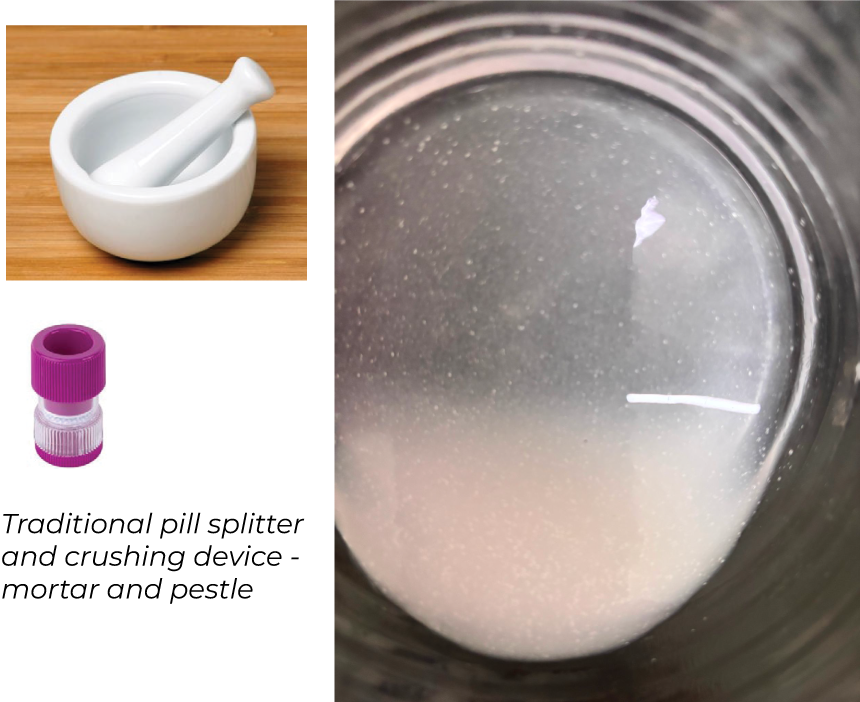
Labour time – Crushing:
Approx 6 minutes.
Figure A
Outcome from manual
crushing of Enalapril.
Note larger particle size and
inconsistent disbursement.
Vetasyst®
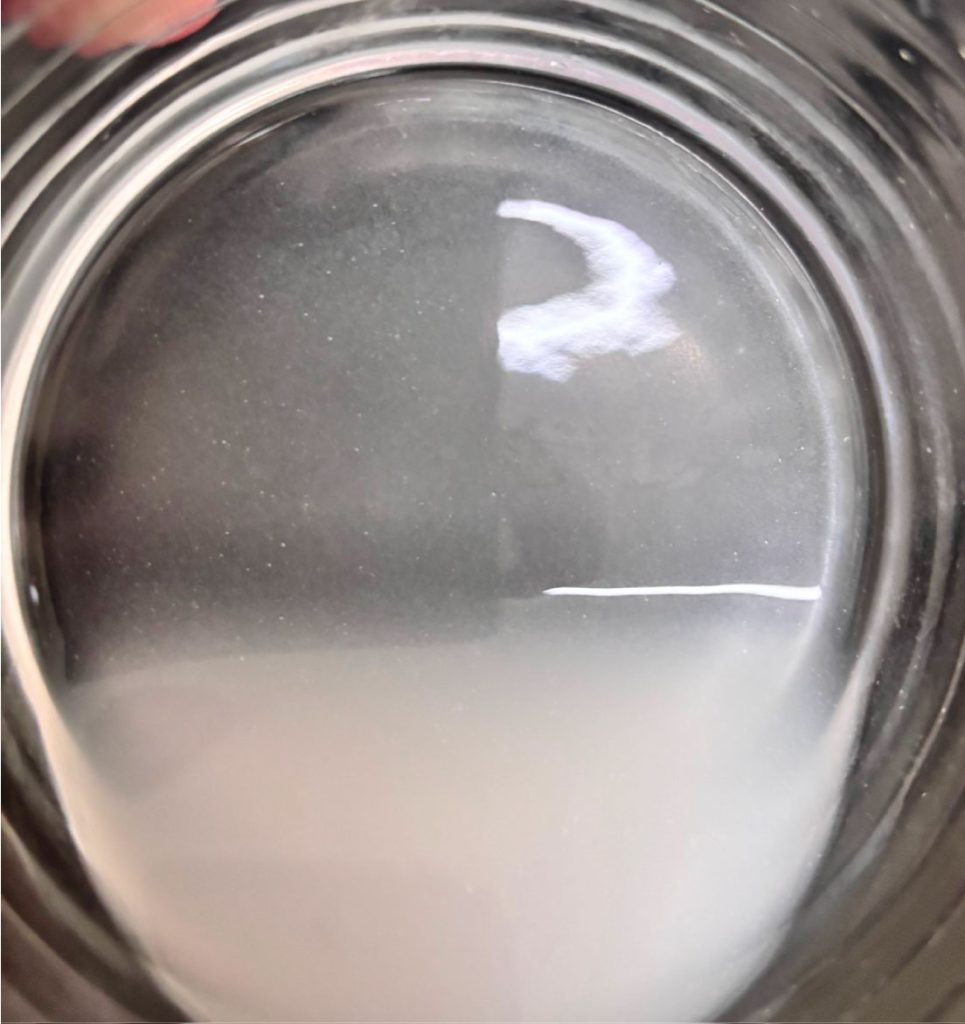
Vetasyst® time:
2 x 4 min cycles.
Labour time – Approx 1 min
Figure B
Outcome showing Vetasyst® with UltrasonIQ® technology to create a small and consistent particle size, evenly disbursed throughout the liquid dose.
KEY BENEFITS IN USING VETASYST.
Compounding of tablets to suspension is simple and easy using the Vetasyst Unit.
The Vetasyst Unit can be used with a variety of volumes and excipients which are used and available around the world.
The Vetasyst Unit purchase ‘payback’ comes from the time savings achieved with reduced time required for crushing and efficiencies generated from in house compounding.
Most common drugs that vets want to compound into suspension can be simply compounded from tablets using this machine. Vets can then supply the drugs to the clients at their visit as they presently do with commercial medications.
Compounding tablets with the Vetasyst Unit is safe for the operator – no fume hoods etc is needed as the machine is all enclosed, this, dramatically reducing any issues with drug aerosolation and other OH & S issues associated with crushing, mixing and handling tablets.
Compounding in one step should reduce the chance of dilution that results from first crushing and then mixing.
Vets can monitor consistency of their own medication where compounded medication from a pharmacy may vary slightly every time it is made. Making it from tablets which the vet is familiar with is more likely to create similar results as when using the tablet medications (especially when mixed with water). Pharmacists use raw ingredients and their own familiar excipients – raw ingredients may not have the same effect as those in commercial tablets as the excipients and ingredients in the tablets can enhance the active ingredient, also the source of active ingredient may be of different quality to that obtained by the pharmacist. Vets don’t really know what excipients the pharmacist use – some are toxic to animals eg sorbitol is toxic to birds, many excipients use sorbitol instead of sugar. Some pharmacy produce medicines have been tested and shown to have significantly lower active ingredient than that labeled.
Vets are licensed to do their own compounding and this with greater flexibility than pharmacist. Pharmacists must only compound on veterinary scripts and must only compound for an individual animal (they are not allowed to compound for general clinic use even if requested by the vet).
KEY BENEFITS IN USING VETASYST.
1.
Compounding of tablets to suspension is simple and easy using the Vetasyst Unit.
2.
The Vetasyst Unit can be used with a variety of volumes and excipients which are used and available around the world.
3.
The Vetasyst Unit purchase ‘payback’ comes from the time savings achieved with reduced time required for crushing and efficiencies generated from in house compounding.
4.
Most common drugs that vets want to compound into suspension can be simply compounded from tablets using this machine. Vets can then supply the drugs to the clients at their visit as they presently do with commercial medications.
5.
Compounding tablets with the Vetasyst Unit is safe for the operator – no fume hoods etc is needed as the machine is all enclosed, this, dramatically reducing any issues with drug aerosolation and other OH & S issues associated with crushing, mixing and handling tablets.
6.
Compounding in one step should reduce the chance of dilution that results from first crushing and then mixing.
7.
Vets can monitor consistency of their own medication where compounded medication from a pharmacy may vary slightly every time it is made. Making it from tablets which the vet is familiar with is more likely to create similar results as when using the tablet medications (especially when mixed with water). Pharmacists use raw ingredients and their own familiar excipients – raw ingredients may not have the same effect as those in commercial tablets as the excipients and ingredients in the tablets can enhance the active ingredient, also the source of active ingredient may be of different quality to that obtained by the pharmacist. Vets don’t really know what excipients the pharmacist use – some are toxic to animals eg sorbitol is toxic to birds, many excipients use sorbitol instead of sugar. Some pharmacy produce medicines have been tested and shown to have significantly lower active ingredient than that labeled.
8.
Vets are licensed to do their own compounding and this with greater flexibility than pharmacist. Pharmacists must only compound on veterinary scripts and must only compound for an individual animal (they are not allowed to compound for general clinic use even if requested by the vet).